How Rivoke Turned Subscription Cancellation Into a Service People Actually Need
There was a time when cancelling a service meant calling a number, saying you wanted to stop, and hanging up. That time is gone. The subscription economy has grown into a $275 billion global market, and the companies inside it have learned that the hardest part of retention is not convincing someone to stay. It is making the process of leaving difficult enough that most people give up before they finish.
The tactics are well documented. A gym membership that can only be cancelled by certified letter. A streaming service that buries the cancel button behind four screens of “are you sure” prompts. A software company that requires a phone call to a retention specialist who is trained to offer discounts, extend trials, and ask probing questions until the customer either relents or runs out of lunch break. The Federal Trade Commission took notice in 2023 and proposed a rule requiring companies to make cancellation as easy as signup. The rule has moved slowly. The charges have not.
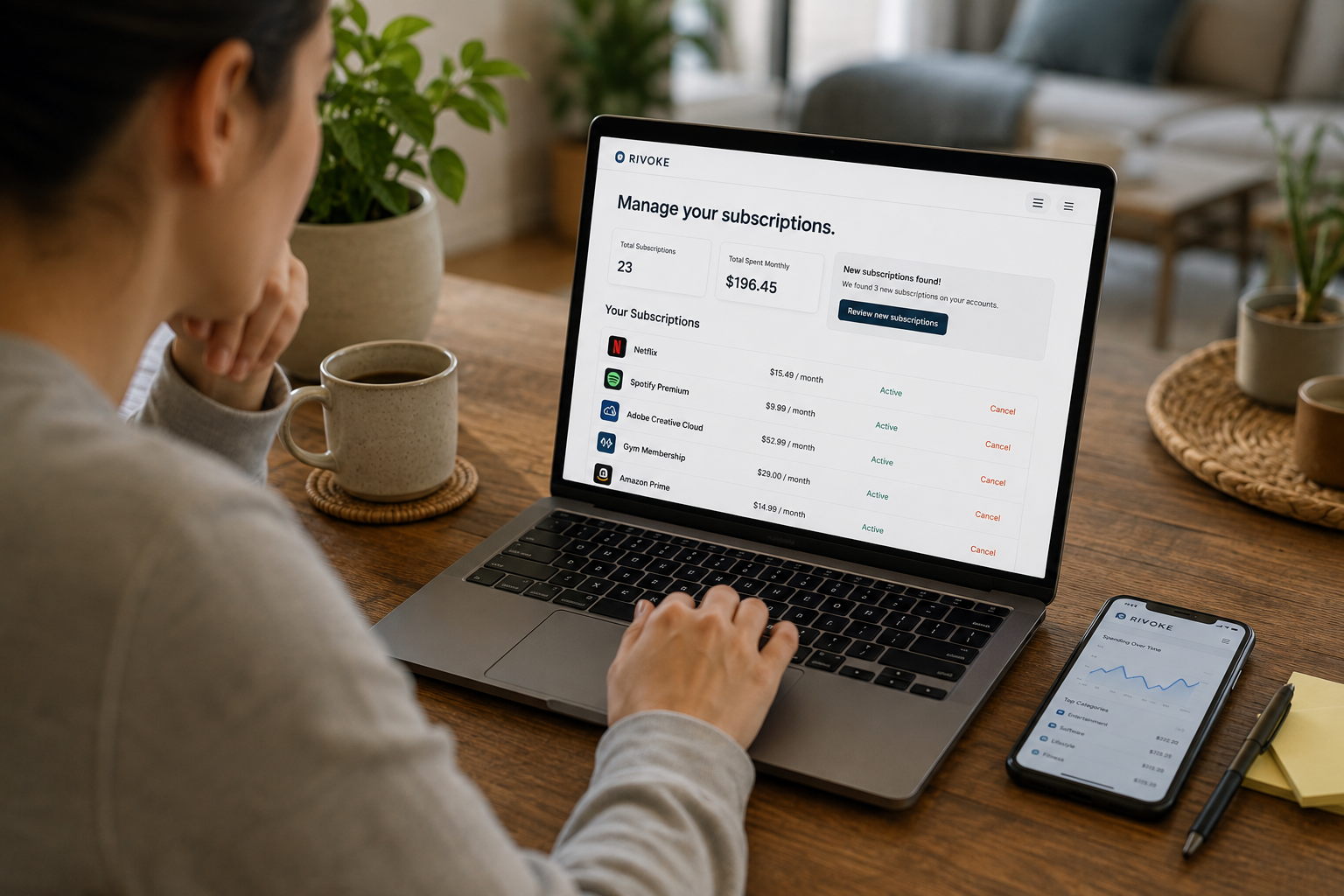
Image credit: Unsplash (royalty-free)
A Problem That Created Its Own Industry
When enough people share the same frustration and the same inability to solve it on their own, a market forms. Subscription management has become that market. Services have emerged that scan bank and card statements for recurring charges, surface the ones users forgot about, and in some cases handle the cancellation process entirely. The premise is simple: if companies have made cancelling hard, someone should make it easy.
Rivoke is one of the clearest examples of this model. The service connects to a payment method, scans for every recurring charge, and presents the full list. The free version shows how many subscriptions were found and the total monthly cost. Rivoke Plus, at $4.99 per month or $39.99 per year, opens the full itemized breakdown and handles cancellations on the user’s behalf. It also monitors for new charges that appear and flags price increases on existing ones.
The economics make sense from the consumer’s side. The average American underestimates their subscription spending by roughly 40 percent. If someone is paying $200 a month in recurring charges and half of those are services they no longer use or want, the savings from a single cleanup session can run into hundreds of dollars annually. A $4.99 monthly fee to have someone else do the work, and keep doing it, is an easy trade when the alternative is an afternoon of phone calls and chat windows.

Why Companies Fight So Hard to Keep You
The reason cancellation is difficult is not incompetence. It is strategy. Every subscriber who stays another month is another month of revenue. Customer acquisition is expensive. A company that spent $30 to acquire a customer through advertising would rather spend $5 worth of friction to retain them for six more months at $14.99 each than let them walk cleanly. The math favors making cancellation annoying, and companies have gotten very good at that math.
Dark patterns in cancellation flows are now studied in UX research as a distinct category of design. Countdown timers that create urgency. Discount offers timed to appear right before the final confirm button. Language designed to make the user feel they are making a mistake. “Are you sure you want to lose access to all your saved data?” These are not bugs. They are features, built and tested to reduce churn by a few percentage points that translate into millions of dollars.
Image credit: Unsplash (royalty-free)
The Shift That Made This Inevitable
Ten years ago, most households had a handful of subscriptions. A gym, a magazine, maybe a streaming service. Today, the average sits at 12 active subscriptions, and that number does not include the ones people forgot about. Software moved to monthly billing. News went behind paywalls. Music, video, gaming, fitness, meditation, meal planning, language learning, and cloud storage all adopted the recurring charge model. Even physical products like razors and vitamins now arrive on a subscription schedule.
Each individual subscription was a reasonable decision at the time. The accumulation was not. And the companies collecting those charges have no incentive to remind customers that they are paying for something they stopped using. The notification you will never receive is the one that says, “You have not opened this app in four months. Would you like to stop paying for it?”
That notification is effectively what a subscription cancellation service provides. Not advice. Not budgeting. Just a clear list of what is leaving your account every month, and a way to stop the ones you no longer want. The fact that this became a product category tells you everything you need to know about how the subscription economy treats the people paying for it.