
What’s Next? Predicting Tomorrow’s Emerging Technology Trends
As technology continues to advance at an unprecedented pace, understanding emerging trends has become increasingly important for organizations, researchers, and innovators. Areas such as artificial intelligence, biotechnology, renewable energy, and digital transformation are rapidly evolving, shaping how industries operate and how societies interact with technology. Observing these developments can provide insight into potential challenges, opportunities, and the direction of future innovation.
Keynote speakers for hire for global conferences often examine these technological shifts, providing analysis and perspectives that help audiences explore what might come next. By presenting research, trends, and real-world examples, they contribute to broader discussions about how emerging technologies could influence the way we live, work, and communicate. Their insights offer a valuable context for anticipating future developments without focusing on specific products or services.
Artificial Intelligence Integration Across Industries
Artificial Intelligence is driving a quiet revolution in many sectors. In healthcare, AI-powered diagnostic tools enable earlier and more accurate disease detection, often outperforming traditional methods and reducing the burden on clinicians. The finance industry employs advanced algorithms to forecast market trends and automate trading strategies, minimizing human error and maximizing speed.
Retail has adopted AI to enhance customer interactions, providing personalized recommendations tailored to each shopper and boosting sales efficiency. Manufacturing relies on intelligent robotics and predictive maintenance, which minimize downtime and maximize output. These applications underline why staying informed about AI’s progression is not optional—it’s vital for success.
Quantum Computing: From Theory to Practice
Quantum computing, once confined to academic speculation, is now edging closer to practical reality. Innovations from major players like IBM and Google are ushering in the first generation of quantum processors designed to tackle problems too complex for conventional computers. This gigantic leap in computational power stands poised to reshape fields such as drug discovery, where molecular modeling becomes hyper-efficient, and climate science, where quantum models promise deeper insight into environmental change.
Quantum’s potential for cryptography and data security is particularly profound, offering solutions that can both break existing encryption and create new, unbreakable algorithms. As these capabilities mature, they will revolutionize how industries process data and solve grand challenges.
The Impact of 5G Networks on Connectivity
The introduction of 5G technology marks a substantial milestone in the evolution of digital connectivity. Offering unprecedented internet speeds and ultra-low latency, 5G networks are expanding the horizons of remote work, autonomous vehicles, and telemedicine. Enhanced mobile bandwidth will facilitate seamless real-time connections between billions of Internet of Things (IoT) devices, driving smarter homes, cities, and industries.
This new connectivity frontier supports the growth of edge computing, allowing businesses and municipal services to process data closer to the source and enable instant responses. As 5G infrastructure continues to roll out globally, organizations are encouraged to reassess how they deliver services, manage data, and engage users across digital platforms. Expanded capabilities will power applications yet to be seen, paving the way for a truly interconnected society.
Augmented and Extended Reality: Beyond Entertainment
AR and XR are expanding rapidly beyond gaming and entertainment, delivering tangible benefits across fields. In healthcare, surgeons employ AR overlays during procedures, gaining instant access to patient imaging directly within their field of view. Medical schools are introducing XR simulations to provide future physicians with lifelike, hands-on training that surpasses the limitations of textbooks.
Education is likewise transforming—students engage with immersive AR content, deepening their understanding of complex topics through interactive experience. In the workplace, XR solutions streamline remote collaboration, maintenance, and training. In architecture and real estate, virtual tours and models simplify the planning of complex projects. These advances demonstrate the power of mixed-reality technology to accelerate learning, enhance safety, and foster innovative teamwork.
The Rise of Agentic AI
A new frontier in machine intelligence is being forged with the advent of Agentic AI. Unlike traditional AI, these systems can plan, execute, and adapt tasks without frequent human intervention. From managing global supply chains to optimizing cybersecurity defenses, Agentic AI increases operational agility and efficiency. Businesses benefit from systems that can detect issues, adjust parameters, and self-correct in real time, often before problems reach critical levels.
This autonomy has a profound impact on resource deployment, customer service, and even legal or financial contract negotiations, freeing human employees for more strategic and creative pursuits. With advances accelerating, the ethical deployment of such autonomous agents is essential, demanding careful oversight to ensure transparency, accountability, and alignment with human values.
Conclusion
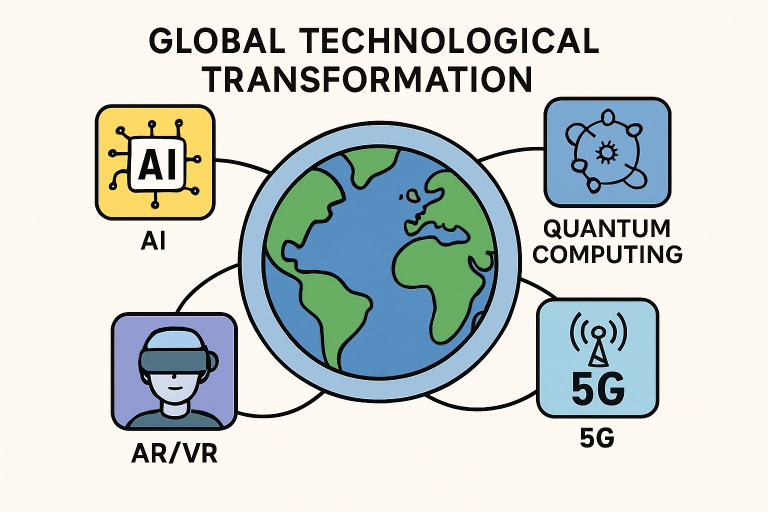
Emerging technologies are reshaping the way we live, work, and interact. From AI and Agentic AI enhancing automation and decision-making, to quantum computing tackling previously unsolvable problems, and 5G expanding connectivity, the pace of innovation is accelerating across industries. Meanwhile, AR and XR are redefining training, collaboration, and experiences beyond entertainment. Staying informed about these trends empowers organizations and individuals to adapt, leverage new opportunities, and navigate the ethical and practical implications of a rapidly evolving technological landscape.