
The Power of Strategic Messaging in Modern Communication
In an era where audiences are bombarded with information from countless channels, the ability to captivate and convince has become a true business differentiator. Strategic messaging shapes how organizations are perceived, developing coherent narratives that cut through noise and foster genuine connections. For brands seeking a meaningful presence, a full-service marketing agency based in Salt Lake City can provide the strategic guidance and execution needed to cultivate consistent messaging and drive results.
Whether you represent a global corporation or a public institution, your communication approach can make or break your reputation. Strategic messaging serves as a roadmap, determining not only what is said but also how, when, and to whom. In a world where perception is reality, being intentional with messaging is the foundation of influence and long-term success.
The importance of coherence and clarity in communication is reflected in the most impactful brands those that manage to foster trust and recognition across platforms. Modern consumers gravitate toward organizations whose stories resonate with their experiences and aspirations. Thus, consistent and audience-centric messaging isn’t just smart it’s essential for survival in today’s competitive markets.
Explore the fundamentals, applications, and future of strategic messaging in this comprehensive guide, including its growing influence across sectors and adaptation to the digital revolution.
Understanding Strategic Messaging
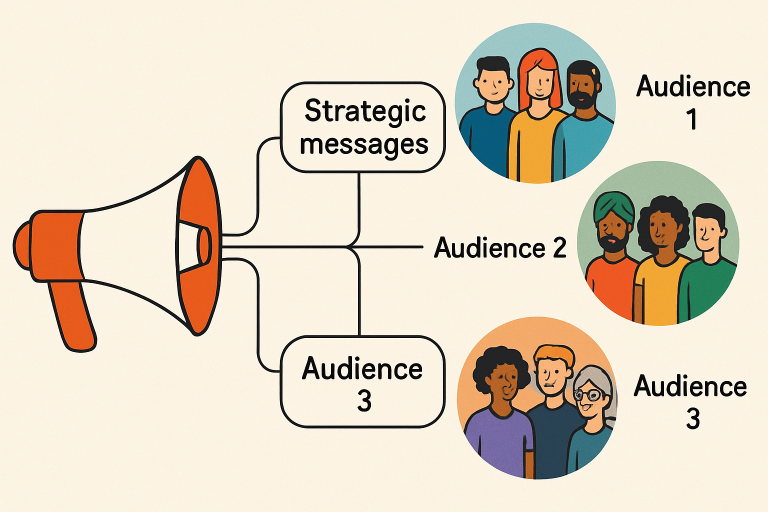
Strategic messaging is the intentional development and distribution of targeted communications to influence public perception and drive organizational goals. It isn’t simply about sending information; it’s about carefully crafting messages that align with overarching objectives and architecting a narrative that motivates audience action. As described in Harvard Business Review, strategic communication brings together marketing, public relations, and leadership communications into a seamless effort that keeps organizations ahead of market demands and reputation challenges.
This framework coordinates everything from core value statements to social posts, press releases, and visual branding. When integrated effectively, it synchronizes the internal and external voice of an organization, ensuring clarity, authenticity, and influence across every touchpoint.
Key Components of Effective Strategic Messaging
Effective strategic messaging involves more than clever slogans or polished press releases. Its foundation rests on four key pillars:
- Clarity: Direct, concise messages are easier to process and remember, fostering trust and minimizing confusion.
- Consistency: Every message, across all channels, should reinforce the same values, mission, and objectives.
- Audience-Centric Approach: A deep understanding of audience preferences, values, pain points, and aspirations enables messages to be highly relevant and persuasive.
- Emotional Appeal: Connecting with emotions is proven to drive engagement, loyalty, and memory retention, giving messages greater resonance and impact.
Mastering these elements lays the groundwork for storytelling that inspires, reassures, and galvanizes action.
Strategic Messaging in Business
For companies, messaging is a critical lever of brand power and customer engagement. The world’s most recognizable brands, like Apple, meticulously plan the rollout of new products so every word, image, and headline aligns with their innovative identity. These efforts stretch across every public interaction, sculpting a narrative of aspiration and simplicity that drives viral anticipation and loyalty.
Small and mid-size businesses can achieve similar effects on a smaller scale by leveraging consistent language and visual identity across advertising, social campaigns, and point-of-sale materials. Clear internal messaging among employees also ensures unity, efficiency, and excellence in customer service.
Strategic Messaging in Public Policy
Governmental and nonprofit organizations rely on strategic messaging to educate, shift behavior, and promote civic engagement. The U.S. Department of Defense emphasizes synchronizing images, actions, and words to drive intended outcomes—whether encouraging public health measures, transparency during crises, or voting participation. Community outreach, press briefings, and targeted campaigns must align seamlessly to ensure credibility and measurable real-world impact.
Strategic Messaging in the Digital Age
With the explosion of digital media, strategic messaging has entered a new era. Social platforms like LinkedIn, X (formerly Twitter), and Instagram have created fast-moving environments where narratives emerge, evolve, and sometimes unravel in real time. Organizations must balance speed and accuracy, responding to news cycles and public conversations while keeping messages authentic and on-brand.
The democratization of communication means anyone can instantly amplify or challenge a message. As The New York Times highlighted, one viral post can sway millions. Thus, monitoring conversations, rapidly adapting messaging, and managing reputational risks are critical for ongoing relevance and control.
Challenges in Strategic Messaging
- Information Overload: Audiences sift through unprecedented volumes of content daily. Cutting through the clutter requires precision and repeated reinforcement of key messages.
- Rapidly Changing Public Opinion: Trends on social media can shift sentiment within hours, demanding agility and a proactive approach to messaging adjustments.
- Maintaining Authenticity: Modern audiences are quick to detect and dismiss insincerity. Transparent, values-based messaging is more likely to foster genuine engagement and minimize backlash.
Future Trends in Strategic Messaging
Data analytics, artificial intelligence, and automation are revolutionizing how organizations approach strategic messaging. Increased reliance on real-time listening tools and cross-channel analytics enables brands to deliver hyper-targeted, personalized messages. Analysts at the Wall Street Journal predict that these technologies will help tailor campaigns and crisis responses more effectively, while also enabling monitoring of audience sentiment and behavior with unprecedented granularity.
The future also points toward more inclusive and interactive messaging strategies, with two-way digital communication driving user-generated content and feedback loops. Organizations willing to embrace transparency, diversity, and rapid adaptation will have a notable advantage.
Conclusion
In a saturated communication ecosystem, strategic messaging has emerged as an indispensable discipline for organizations across all sectors. By mastering the principles of clarity, consistency, audience focus, and emotional impact, businesses and public institutions alike can rise above the noise, build trust, and achieve ambitious objectives. Adaptation to technology and ever-shifting public expectations will be essential, making strategic messaging not just a tactic but a core function for future success.